Working with Vintage Script Overlay Blenders Set 2: Textures, Techniques, and Timeless Appeal
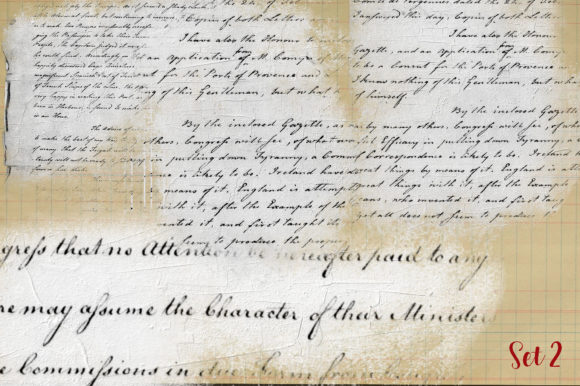
The way paper feels under a fingertip, the way ink settles into fibers, the subtle gradient of sepia bleeding into cream—these sensory details matter deeply to anyone who works with physical or digital collage. The Vintage Script Overlay Blenders Set 2 captures precisely this intersection of tactile nostalgia and creative flexibility. A collection of high-resolution script overlays rendered on white and sepia-toned textured paper, this resource speaks to a growing desire among artists, designers, and memory keepers to infuse their work with the warmth of analog history, even when creating in purely digital environments.
What distinguishes this particular set is not simply the presence of vintage handwriting, but the thoughtful pairing of script with substrate. The textured paper isn't an afterthought—it's integral to the believability of the overlay. When you layer one of these scripts over a photograph, the grain of the paper interacts with the image beneath it, creating a composite that feels like a found artifact rather than a digital manipulation. That subtlety is everything.
The Material Language of Sepia and White Grounds
Color temperature dictates mood more than almost any other design variable. The Vintage Script Overlay Blenders Set 2 offers two distinct tonal foundations that serve different narrative purposes. The sepia-toned papers carry warmth, age, and a certain romantic melancholy. They evoke library archives, handwritten letters tucked into old books, and photographs developed in darkrooms a century ago. The white textured papers, by contrast, provide a cleaner, more neutral base while still retaining that essential tactile quality—the visible fibers, the slight unevenness of handmade stock, the gentle shadows that fall across the surface.
These aren't simply color variations. They represent two divergent aesthetic paths. Sepia scripts work beautifully when you want to emphasize continuity with the past, when the project calls for a unified antique feel. White scripts on textured ground offer greater versatility in contemporary contexts, allowing the vintage handwriting to stand out without the additional color cast. Designers who understand this distinction can make intentional choices rather than defaulting to whatever overlay happens to be nearest.
Why Paper Texture Remains Irreplaceable
In an era of flat design and vector precision, texture introduces imperfection—and imperfection signals humanity. The human eye is remarkably adept at detecting authenticity. A perfectly smooth digital canvas with a script font applied to it reads as exactly what it is: a simulation. But when genuine paper texture underlies that same script, complete with subtle variations in absorbency and faint fiber patterns, the brain accepts it differently. The Vintage Script Overlay Blenders Set 2 provides this authenticity because the textures are derived from real papers, not algorithmically generated approximations.
This matters for emotional resonance. A wedding invitation featuring these overlays feels more personal. A brand identity for an artisanal food producer gains credibility. An art journal page achieves depth that flat elements simply cannot replicate. Texture communicates care, history, and attention to detail without saying a word.
Creative Integration Across Different Mediums
The versatility of script overlays extends far beyond simply placing them on top of background images. Understanding the various blending approaches opens up dramatically different creative outcomes, each suited to particular projects and aesthetic goals.
Digital Art Journaling and Mixed Media
Art journalers were among the earliest adopters of digital overlay resources, recognizing that these elements could simulate the layered complexity of physical collage without the bulk or permanence. With the Vintage Script Overlay Blenders Set 2, journalers can incorporate handwritten historical elements into their compositions, building depth through multiple blended layers. A common technique involves placing a sepia script overlay above a watercolor wash, setting the blend mode to multiply, and watching the handwriting appear to sink into the painted surface. The textured paper component means you're not just getting script—you're getting script on a surface that already possesses visual interest.
For those working in physical journals who scan their pages for digital enhancement, these overlays bridge the gap between analog and digital beautifully. Print a page, apply wet media, scan it back in, layer a script overlay, and the resulting composite defies easy categorization as purely digital or purely physical. That ambiguity is precisely what many mixed-media artists pursue.
Photography Enhancements and Portrait Work
Photographers incorporating vintage aesthetics into their work face a particular challenge: genuine vintage elements are scarce, fragile, and often unsuitable for direct integration into modern images. The Vintage Script Overlay Blenders Set 2 solves this by providing pristine digital captures of authentic vintage scripts that can be applied non-destructively to any photograph. Portrait photographers, in particular, have embraced these overlays for creating fine art composites where script appears to drift across the image, sometimes interacting with the subject's skin or clothing through careful masking.
The key to successful photographic integration lies in respecting light and shadow. An overlay applied uniformly across an image with varied lighting will immediately appear artificial. Skilled practitioners use layer masks to reduce opacity in shadowed areas and increase it where light falls naturally across the composition. The white textured variants are especially useful for high-key portraits, while the sepia versions complement warm-toned, low-key imagery.
Branding and Commercial Design Applications
Business owners and brand designers seeking to communicate heritage, craftsmanship, or artisanal quality find tremendous utility in vintage script resources. A packaging design for small-batch spirits, a logo for a boutique letterpress studio, signage for a farm-to-table restaurant—these applications benefit from the authenticity that the Vintage Script Overlay Blenders Set 2 provides. Unlike script fonts, which can feel repetitive and mechanically precise, genuine handwritten overlays carry the irregularity of actual penmanship. Letter spacing varies slightly. Ink density fluctuates. The baseline waivers. These imperfections are design assets, not flaws.
Commercial users should be mindful of licensing terms and ensure their usage aligns with the permissions granted. When used appropriately, these overlays can differentiate a brand in crowded markets where consumers increasingly value authenticity over polish.
Technical Mastery for Professional Results
While the overlays themselves are straightforward to use, achieving professional results requires understanding some fundamental techniques that separate amateur composites from polished work.
Blend Modes and Their Effects
The choice of blend mode dramatically transforms how a script overlay interacts with layers beneath it. Multiply mode is the workhorse for vintage effects, darkening the underlying image while allowing the paper texture to merge naturally. White areas of the overlay become transparent, which is why white textured papers with dark script work particularly well in multiply mode—the white substrate disappears, leaving only the dark handwriting and subtle paper grain visible against the background.
Overlay and Soft Light modes produce more delicate results, preserving more of the original image's character while introducing the script as an atmospheric element rather than a dominant feature. These modes excel when you want the handwriting to feel like a ghostly impression rather than primary content. Screen mode inverts the multiply logic, lightening the composite and working best with dark scripts on light backgrounds where you want to preserve the paper's brightness.
Experimentation with opacity accompanies blend mode selection. An overlay at full strength rarely produces the most compelling result; pulling back to 40-70% opacity often yields a more integrated, believable composite. The Vintage Script Overlay Blenders Set 2 responds beautifully to these adjustments because the high-resolution source files retain detail even at reduced opacity.
Masking Strategies for Selective Application
Rarely does a creative project benefit from a script overlay applied uniformly across the entire canvas. Strategic masking—concealing portions of the overlay while revealing others—creates visual hierarchy and draws the viewer's eye through the composition. Layer masks allow for partial removal where the script competes with important subject matter, while gradient masks produce gentle transitions that feel organic.
For portrait work, masking script away from faces and skin tones while allowing it to remain visible in negative space or clothing areas preserves the subject's readability while maintaining the vintage atmosphere. For product photography, masking scripts behind the featured item while keeping them visible in surrounding space creates depth without distraction.
Historical Context and Design Heritage
Understanding what makes vintage scripts compelling enhances the ability to use them effectively. The handwriting styles represented in resources like the Vintage Script Overlay Blenders Set 2 typically span the 18th through early 20th centuries, reflecting a period when penmanship was taught as a distinct discipline and personal correspondence represented the primary means of long-distance communication. Copperplate scripts, Spencerian hands, and informal cursive variations all carry the imprint of their era.
This historical weight matters because it connects contemporary creative work to a lineage of human expression that predates digital communication. When a designer incorporates these scripts into a modern project, they're not simply applying a decorative element—they're creating a dialogue between past and present modes of personal expression. Audiences respond to this dialogue, often without consciously recognizing why a particular design feels more substantial or emotionally resonant.
The Educational Value for Students and Researchers
Beyond commercial and artistic applications, educators and researchers in design history, material culture, and archival studies find resources like these valuable for teaching and analysis. Being able to examine high-resolution captures of genuine vintage script on textured paper allows students to study penmanship styles, paper composition, and the material qualities of historical documents without handling fragile originals. The Vintage Script Overlay Blenders Set 2 serves as a reference library as much as a creative tool.
Design educators, in particular, use these overlays to demonstrate principles of texture, contrast, and historical appropriation in student projects. The immediacy of digital application lowers the barrier to experimentation while still conveying authentic aesthetic principles that transfer to physical media work.
Practical Considerations for Project Planning
Successful integration of vintage script overlays into a project workflow requires attention to several practical factors that affect the final outcome. Resolution is paramount—low-resolution overlays betray themselves immediately through pixelation or softness that contrasts with the sharp elements in the rest of the composition. The overlays in this set maintain sufficient resolution for print applications, which distinguishes them from web-only resources that fail when projects need to exist in physical form.
File organization also merits consideration. Creators who accumulate multiple overlay sets benefit from establishing consistent naming conventions and storage structures that allow rapid location of specific elements. Tagging overlays by tone (sepia versus white), script density (densely written versus sparsely lettered), and orientation (horizontal correspondence versus vertical fragments) streamlines the creative process and prevents the frustration of hunting through unorganized assets.
Color adjustments represent another practical dimension. While the sepia and white tones are designed to work in a wide range of contexts, specific projects may call for cooler or warmer variations. Applying hue and saturation adjustments directly to the overlay layers, or using gradient maps to remap the tonal range, extends the versatility of the base assets significantly. A sepia script can become cool blue for a cyanotype-inspired composition or shift toward amber for a warmer, more golden aesthetic—all while retaining the essential character of the penmanship and paper texture.
Community Practices and Creative Exchange
The community of artists and designers working with vintage overlay resources has developed a rich set of shared practices and aesthetic conventions while simultaneously encouraging individual experimentation. Online forums, social media groups, and workshop environments facilitate the exchange of techniques, with practitioners demonstrating everything from subtle, barely-there script incorporations to bold, textural compositions where the overlay becomes the primary visual element.
What emerges from observing this community is a recognition that no single approach dominates. Some creators favor the Vintage Script Overlay Blenders Set 2 for backgrounds in scrapbook-style layouts where multiple vintage elements combine to create densely layered personal narratives. Others use individual script fragments as focal points, enlarging portions of the handwriting to the point where individual ink strokes become abstract gestural marks divorced from their linguistic meaning.
This spectrum of application—from faithful historical reference to abstracted texture—demonstrates the resource's flexibility. The same overlay that grounds a heritage brand's visual identity can become pure texture in an experimental art piece. That duality ensures the set remains relevant across changing design trends and personal creative evolution.
Hobbyists discovering these resources for the first time often express surprise at how significantly a single overlay can transform a project. A simple photograph becomes a storytelling piece. A digital scrapbook page gains generations of implied history. A greeting card transcends mass-produced genericism. The learning curve is gentle enough for beginners while the depth of creative possibility sustains the interest of experienced designers—a balance that explains the enduring popularity of well-crafted vintage script resources across skill levels and application domains.