How Handdrawn Days of the Week Stickers Bring Personality and Purpose to Your Planner
There is something deeply satisfying about opening a planner and seeing the week laid out in beautiful, hand-lettered detail. For many people, planning is not just about scheduling appointments or remembering deadlines—it is a creative ritual, a moment of calm, and a way to connect with intentions before the busyness of daily life takes over. At the heart of this experience are script days of the week stickers and handdrawn days of week clip art, small design elements that make a surprisingly big impact on how we organize our time.
This article explores the world of handdrawn weekday labels, why they have become so popular among planner enthusiasts, how they work with different planning systems, and what to look for when choosing or creating your own. Whether you are new to decorative planning or have been collecting stickers for years, understanding the value behind these tiny pieces of art can help you build a planning routine that feels both functional and joyful.
What Are Script Days of the Week Stickers?
At their simplest, days of the week stickers are labels that display the seven weekdays—Monday through Sunday—often in a stylized or decorative format. The term "script" refers to the lettering style used, which mimics flowing, cursive handwriting. Unlike plain printed text, script lettering has graceful connections between letters, varied line thickness, and an organic, human feel. When applied to weekday labels, this script style can evoke anything from elegant calligraphy to playful, casual handwriting.
The handdrawn aspect is equally important. Rather than relying on standard computer fonts, many artists create weekday designs by sketching or painting the letters by hand, then digitizing the artwork at a high resolution. This process preserves the subtle imperfections, brush strokes, and personality that make each piece feel unique. The result is a set of clip art images in PNG format with transparent backgrounds, typically saved at 300 dpi for crisp, professional-quality printing.
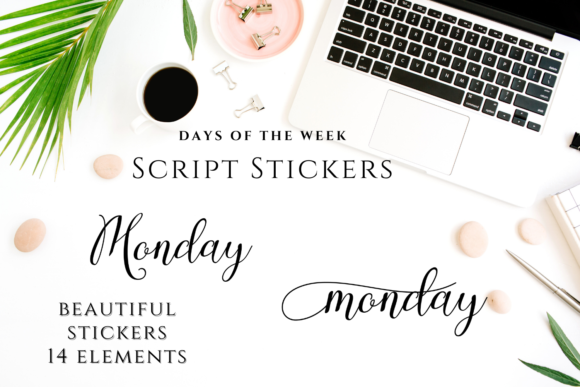
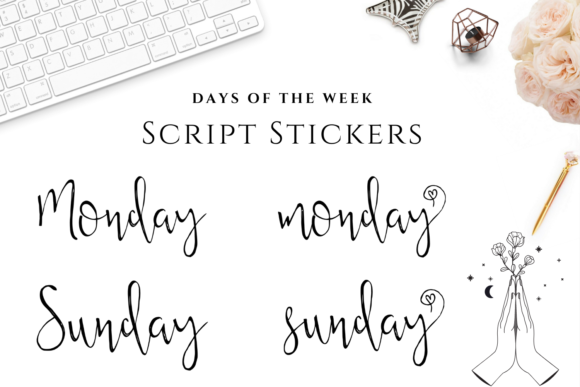
A typical set might include 14 individual clip art images—seven days rendered in two distinct design versions. Having two versions gives users creative flexibility. One might be a formal, flourished script suitable for elegant weekly spreads, while the other could be a more relaxed, whimsical handdrawn style for casual journaling. The transparent background means these images can be placed seamlessly over any colored paper, patterned layout, or digital design without an unsightly white box around them.
Why Planner Enthusiasts Love Handdrawn Weekday Labels
To someone who has never used decorative stickers in a planner, it might seem unnecessary to replace the days of the week that are already printed on most calendars. However, anyone who has spent time in the planning community understands that customization is key to making a planner feel like home. Standard printed days can feel rigid or uninspiring. Replacing them with handdrawn labels transforms a generic template into a space that reflects personal style and creative energy.
1. Personal Expression Through Lettering
Handdrawn script captures a sense of artistry that machine-printed text cannot replicate. Each letter feels intentional. The varied strokes, the way an "S" might curl with extra flourish, or how a "T" has a slightly longer crossbar—these details give the design character. When you place a beautifully lettered "Wednesday" sticker at the top of your daily box, you are engaging with your planner in a more meaningful way than simply reading a printed headline.
2. Versatility Across Planning Systems
Handdrawn days of the week clip art is designed to be compatible with a wide range of planner formats. The product description for many such sets explicitly mentions compatibility with the Erin Condren LifePlanner, The Happy Planner, and similar disc-bound or coil-bound systems. This is because the typical size for weekday stickers—often around 10 inches by 2 inches—fits neatly across the header space of a horizontal weekly layout. However, because the images are provided as individual PNG files, users can resize them to fit smaller planners, bullet journals, or even digital planning apps on tablets.
3. The Joy of Tactile Creativity
There is a reason why paper planning has endured in an age of sophisticated digital calendars. The physical act of peeling a sticker, positioning it carefully, and smoothing it onto the page engages the senses in a way that tapping on a screen does not. Handdrawn stickers enhance this tactile experience because they look and feel like miniature pieces of art. Using them becomes part of a self-care routine, a weekly reset ritual that helps you transition from one week to the next with clarity and intention.
Understanding the Two-Version Approach
When a clip art set offers two versions of each day, it opens up creative possibilities that a single design cannot. The first version might feature an elegant, flowing script with delicate flourishes—ideal for formal or minimalist spreads, wedding planner layouts, or professional-looking bullet journals. The second version could be a playful, hand-lettered style with a slightly rougher texture, quirky letter shapes, or whimsical decorative elements like tiny hearts or dots.
This duality allows you to switch styles depending on your mood, the season, or the purpose of the planner. A meal planner might benefit from the playful version, while a work project tracker could call for the more refined script. Having both options in one set means you do not need to purchase multiple sticker packs to achieve variety—the flexibility is built right in.
How Handdrawn PNG Clip Art Works in Practice
For those unfamiliar with digital clip art, the technical specifications matter more than they might initially seem. The product description highlights that each file is in PNG format with a transparent background at 300 dpi. Let me break down why each of these features is essential for both printing and digital use.
PNG Format and Transparent Backgrounds
PNG stands for Portable Network Graphics. Unlike JPEG files, PNGs support transparency. This means that when you import a PNG image into a design program—whether it is professional software like Adobe Photoshop, a free tool like Canva, or even a word processor—the background of the image is invisible. You can layer the script weekday over any color, pattern, or existing layout without covering up what is behind it. For planner designers and sticker makers, this is non-negotiable. It allows for clean, professional-looking results every time.
300 DPI for Print Quality
DPI stands for "dots per inch" and refers to the resolution of an image. At 300 dpi, the clip art is considered high resolution—sufficient for crisp, clear printing on standard home printers as well as commercial printing services. If you try to print a low-resolution image, the edges may appear blurry or pixelated, which defeats the purpose of using beautiful handdrawn art. The 300 dpi standard ensures that every delicate brush stroke and swirl of the script is reproduced sharply on paper.
Individual PNG Files
Having each day as a separate, individual PNG file rather than a single sheet of pre-arranged stickers offers maximum flexibility. You can choose to print only Mondays and Tuesdays if that is what you need. You can resize "Saturday" to be larger or smaller depending on your layout. You can arrange the images on a digital canvas to create custom sticker sheets, mixing and matching versions as you like. This modular approach puts creative control firmly in your hands.
Practical Applications Beyond Personal Planners
While planner stickers are the most obvious use case, handdrawn days of the week clip art can be applied in many other contexts. Once you start thinking creatively, the possibilities expand rapidly.
- Bullet Journaling: Use the script labels as headers for daily logs, habit trackers, or gratitude sections. The transparent background allows them to blend beautifully with hand-drawn borders, washi tape, and ink sketches.
- Classroom Decor and Teaching Materials: Teachers can incorporate handdrawn weekday labels into morning routine charts, weather boards, or homework assignment sheets. The artistic, approachable style appeals to young learners and adds warmth to educational materials.
- Small Business Branding: Stationery designers, printable shop owners, and Etsy sellers can use the clip art to create commercial products—provided the license allows it. Days of the week labels are a staple element in many printable planner kits, menu planners, and chore charts.
- Digital Planning: Many people now use apps like GoodNotes, Notability, or ZoomNotes on iPads and other tablets. High-quality PNG stickers can be imported into these apps and used just like physical stickers, offering a zero-waste, endlessly reusable option.
- Scrapbooking and Memory Keeping: Highlighting which day a photo was taken or an event occurred becomes more meaningful with beautifully scripted labels. They add a layer of storytelling to scrapbook pages and memory albums.
- Social Media Graphics: Content creators can use script weekday art to design engaging Instagram stories, Pinterest pins, or blog post banners that announce themed daily content like "Motivation Monday" or "Throwback Thursday."
Choosing the Right Handdrawn Weekday Set for Your Needs
Not all clip art sets are created equal. When you are shopping for script days of the week stickers, keep the following considerations in mind to ensure you get a product that meets your expectations.
Design Quality and Authenticity
Look for sets that are genuinely handdrawn by an artist rather than automatically generated from a font. True handdrawn art has subtle variations between letters—no two "e" characters should look exactly identical. The strokes should feel organic, with natural variations in thickness that mimic real brush pens or ink. The artist's individual style should shine through, whether it leans toward modern calligraphy, vintage lettering, or charming hand printing.
File Format and Resolution
Always check that the files are provided in PNG format with transparent backgrounds and at 300 dpi. If a seller offers JPEG files instead, be aware that you will lose the transparency feature and may see a white box around each image when you print or layer it. The 300 dpi specification is especially important if you plan to print the stickers at any significant size.
Licensing Terms
Pay close attention to how you are allowed to use the clip art. Some sets are for personal use only, meaning you can print them for your own planners, journals, and projects but cannot sell or distribute products that include the designs. Others may come with a commercial license, allowing you to incorporate the artwork into items you sell, such as printable sticker sheets or physical planner accessories. If you run a small stationery business or are considering opening a shop, understanding these terms is crucial.
Versatility and Sizing
While the standard size of 10 inches by 2 inches works well for many popular planners, think about whether you might need to resize the images. High-quality PNG files can generally be scaled down without losing sharpness, but scaling them significantly larger than their original dimensions can introduce blurriness. If your planner has unusually large or small header spaces, confirm that the images will adapt well to your layout.
The Rise of Handdrawn Elements in a Digital World
The growing popularity of handdrawn script stickers reflects a broader cultural shift toward valuing the imperfect, the personal, and the human touch. In a world saturated with perfectly uniform digital interfaces, handdrawn elements stand out precisely because of their warmth and irregularity. They remind us that a real person—an artist like Aneta Filip, whose work is appreciated by many in the planner community—sat down with a pen or brush and created each letter with care.
This appreciation for handcrafted design extends across creative fields. From wedding invitations to restaurant menus to book covers, consumers are increasingly drawn to visuals that feel personal and approachable rather than coldly mechanical. Days of the week stickers may be small, but they are part of this larger narrative about what we value in design and in our daily rituals.
Common Misunderstandings About Digital Sticker Files
For anyone new to using digital clip art, a few points can cause confusion. Let me clarify some common misunderstandings.
Myth: "PNG files are physical stickers." PNG files are digital images. You must print them onto sticker paper yourself or use a print service to create physical stickers. However, many people prefer this because it gives them control over paper type, finish (matte or glossy), and sizing. Plus, you can reuse the files indefinitely for digital planning without ever printing at all.
Myth: "All transparent backgrounds work perfectly everywhere." While PNG transparency is widely supported, some older software or basic word processors may display a checkered pattern or white fill instead. Modern design tools like Canva, Photoshop, Procreate, and even Google Slides handle transparent PNGs beautifully. If you encounter issues, the problem is usually with the software, not the file.
Myth: "You need expensive equipment to use clip art." You can use these files with a standard home inkjet or laser printer and affordable printable sticker paper. For digital planning, all you need is a tablet with a stylus and a compatible note-taking app. The barrier to entry is surprisingly low.
Integrating Handdrawn Weekday Stickers into Your Creative Routine
Building a consistent planning habit can be challenging, but incorporating small creative touches makes the process more rewarding. Here is a simple approach to making handdrawn weekday labels part of your weekly rhythm.
- Set aside time for your planning ritual. Many people choose Sunday evening or Monday morning. Light a candle, make a cup of tea, and gather your supplies—planner, stickers, pens, and anything else that sparks joy.
- Choose your style for the week. Browse the two versions of each day in your clip art set. Do you feel drawn to the elegant script this week, or does the playful handdrawn style match your energy better? There is no wrong choice.
- Print or import your chosen labels. If you are a paper planner user, print the stickers onto your preferred paper. If you plan digitally, import the PNG files into your app and arrange them on your weekly spread.
- Arrange with intention. Place each day label carefully at the top of the corresponding section. Take your time smoothing out any air bubbles if you are using physical stickers. Notice how the handdrawn lettering transforms the look of the page.
- Fill in your plans with gratitude. As you write appointments, goals, and to-do items, let the beautiful headers remind you that your time is valuable and worthy of this intentional care.
Why Transparent Backgrounds Are a Game-Changer for Designers
For those who create planner layouts, printable kits, or digital products, transparent backgrounds on clip art are essential. They allow designers to place script weekday labels directly over decorative elements like watercolor washes, geometric patterns, or photographs without any harsh edges. The transparency ensures that the sticker blends seamlessly into the overall composition, looking like it was always meant to be there rather than pasted on as an afterthought.
Additionally, transparent PNGs enable color customization in many design programs. You might apply a color overlay to change black text to white for dark-themed layouts, or to match the lettering to a specific color palette in your planner. This level of flexibility significantly extends the usefulness of a single clip art purchase.
The Artist Behind the Art: A Note on Creative Value
When you purchase a set of handdrawn weekday clip art, you are supporting an independent artist. The name Aneta Filip attached to the product description represents a real creative professional who invested time and skill into crafting each letter with care. In an era of mass-produced digital assets, handdrawn work retains a special value. The subtle variations in stroke weight, the intentional imperfections, and the overall harmony of the lettering reflect hours of practice and a genuine artistic vision.
This connection between creator and user adds another layer of meaning to the planning experience. Each time you use a sticker, you are not just decorating a page—you are appreciating and supporting the human creativity that made it possible. In a small but significant way, that enriches the ritual of planning and organization.
Final Thoughts on Bringing Script Days into Your Week
Handdrawn days of the week stickers occupy a unique space where art meets organization. They serve a practical purpose by clearly labeling the sections of your planner, yet they also bring warmth, personality, and creative satisfaction to the act of planning. Whether you lean toward elegant script or playful hand lettering, having two versions of each weekday gives you the freedom to express different moods and match different seasonal aesthetics throughout the year.
From their transparent PNG format and 300 dpi print quality to their compatibility with popular planners like the Erin Condren LifePlanner and The Happy Planner, these clip art designs are crafted with the needs of real users in mind. They are equally at home in a teacher's classroom, a bullet journal enthusiast's notebook, a digital planner on an iPad, or a small business owner's printable product line.
In the end, the days of the week are the framework upon which we build our lives. Decorating them with handdrawn art is a gentle reminder that even the most routine aspects of our schedules can be infused with beauty and intention. And in a world that often moves too fast, taking a moment to appreciate thoughtful design—and the human hands behind it—is a practice worth keeping.