What a KDP Script Writing Notebook Actually Delivers for Self-Publishers
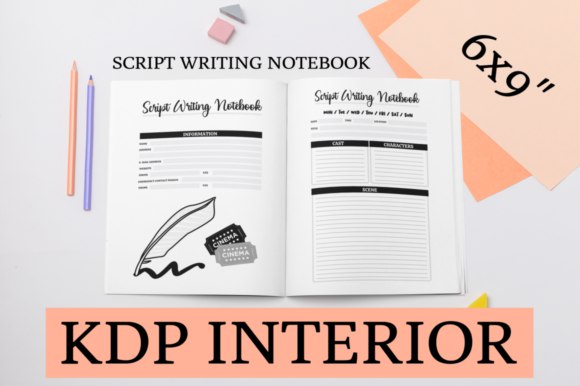
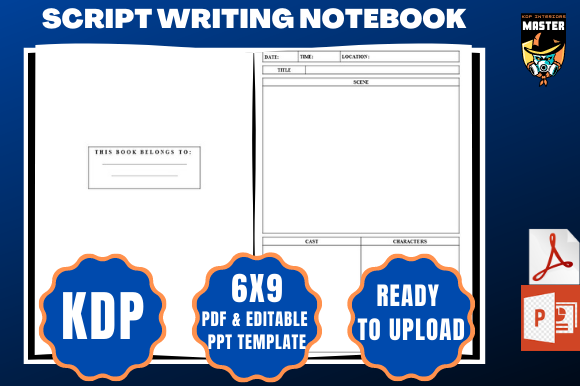
If you have spent any time browsing low-content book templates, you have probably come across the KDP Script Writing Notebook as a ready-to-upload interior. It promises a straightforward path to publishing—100 pages, standard 6×9 trim, bleed turned on, and both PDF and PowerPoint files included. On the surface that sounds convenient. But convenience does not always mean quality, and a surprising number of buyers jump in without checking the details that determine whether their final book looks professional or slapdash.
This article is not about convincing you to buy a specific product. It is about helping you understand what this type of interior actually involves, where people routinely get tripped up, and how to evaluate whether a KDP Script Writing Notebook file will work for your publishing goals—not just the seller's description.
Why Interest in Script Writing Notebook Interiors Keeps Growing
Low-content publishing attracts a broad range of people. Educators want guided writing tools for students. Coaches and consultants create branded notebooks for workshops. Hobbyists design personal journals, and entrepreneurs build entire brands around niche stationery. A script writing notebook slots neatly into several categories: screenwriters practicing format, podcasters scripting episodes, video creators outlining content, or language learners practicing dialogue. The appeal of an instant-download interior is obvious—skip the design work, upload, and publish.
Yet the term KDP Script Writing Notebook itself can be misleading. Some buyers assume it includes a full scriptwriting guide or instructional content. It does not. This product is only the interior—lined or formatted pages intended for handwriting or notation. The value lies in the layout, not the educational material. When someone buys this expecting a workbook with lessons, disappointment follows quickly.
Overlooking Bleed Settings and How That Ruins Your Cover Alignment
One of the most common mistakes is ignoring what "Bleed On" really means for your project. The product lists bleed as enabled, which is standard for interiors that have design elements running to the page edge. But here is the catch: bleed settings in an interior file must match the bleed setting you select when setting up your KDP title. If your interior PDF has bleed but you configure the KDP title without bleed—or vice versa—you can end up with misaligned margins, unexpected white borders, or trimming that cuts into your content.
More importantly, a script writing notebook typically consists of ruled lines, header sections, and maybe small decorative elements. Most pages will not have artwork bleeding off the edge. So why is bleed turned on? In some templates, it is a precautionary setting. In others, it is simply carried over from the original design file without much thought. You need to open that PDF and inspect whether bleed is genuinely necessary or whether you could save yourself printing complications by working with a no-bleed setup.
What to check: Open the PDF in Adobe Acrobat and look at the document properties. Confirm the trim box, bleed box, and actual page dimensions. If the bleed box extends beyond 6×9 inches but no content reaches that area, you have bleed enabled with nothing bleeding. That is not a dealbreaker, but it does mean you must set up your KDP listing to match, or risk automated processing rejecting your file.
Assuming the PowerPoint File Is an Exact Copy of the PDF
The inclusion of both a PDF and a PowerPoint file sounds generous—and it can be genuinely useful. The PDF is the print-ready upload. The PowerPoint file allows you to customize the interior: adjust fonts, add branding, insert page numbers, or tweak the line spacing. But some buyers open the PowerPoint version, make a quick edit, export to PDF, and upload without checking the result against the original.
PowerPoint handles typography, line weights, and object positioning differently than professional layout software. If the original designer built the KDP Script Writing Notebook in PowerPoint itself, consistency between the two formats might be decent. If the original was built in InDesign or Affinity Publisher and then converted, subtle shifts can occur—margins move by a fraction of an inch, fonts substitute without warning, line spacing compresses. Over 100 pages, those tiny discrepancies add up to a product that looks slightly off.
A better approach: Before uploading any customized interior to KDP, export it from PowerPoint using the highest resolution settings. Then open both the original PDF and your exported version side by side. Zoom in to 200% on a few random pages. Check the margins, the header placement, and the baseline alignment of any repeated elements. Catching a half-millimeter shift here saves you from negative reviews later.
Confusing "Interior Only" with a Complete Book Package
The product note states clearly: "This is ONLY for the Interior." Still, a surprising number of first-time publishers overlook this. They download the files, upload to KDP, and wonder why their book has a blank cover or why the listing feels incomplete. An interior file gives you the pages between the covers—nothing more. You remain responsible for designing or sourcing a cover, writing your product description, selecting keywords, and setting pricing.
This is not a flaw in the product. It is a misunderstanding of what low-content interiors actually provide. If you are new to KDP, factor in the additional time and cost for cover design—even a simple text-based cover takes effort to look polished. A script writing notebook compete with a poorly designed cover signals amateur quality to potential buyers, regardless of how nice the interior layout is.
Neglecting the "100 Check Quality" Promise Without Verification
The phrasing "100 Check quality on KDP, Ready to upload" means the seller claims to have run the file through KDP's automated checks. That is reassuring, but verification requirements change over time. KDP periodically updates its print specifications, and a file that passed checks six months ago might trigger warnings today—especially around margin minimums, font embedding, or image resolution thresholds.
Rather than taking the claim at face value, run your own check. Upload the interior to KDP's previewer before committing to publish. Flip through every page in the online preview tool. Look for gray bars indicating content too close to the edge, missing fonts, or blank pages that should not exist. The KDP previewer is not perfect, but it catches most issues that lead to blocked submissions or returned author copies.
Misjudging Whether 100 Pages Fits Your Audience's Expectations
One hundred pages in a 6×9 format notebook sounds generous until you consider the end user. A scriptwriting notebook needs enough space to be useful without becoming unwieldy. For classroom use, 100 pages might be ideal—enough for a semester of exercises without intimidating students. For a professional screenwriter accustomed to thick notebooks, 100 pages might feel thin for the price they paid.
There is no universal right answer here. The mistake is listing the book without clearly communicating the page count in the description or on the cover. Customers who expect 200 pages and receive 100 feel shortchanged, even if your listing technically states the count. Some successful publishers print the page count directly on the cover for transparency: "100 Script-Writing Pages | 6×9 Format." This small addition reduces returns and negative feedback.
Forgetting That Script Writing Layouts Vary Widely
Not all script writing notebooks share the same internal structure. Some use standard screenplay formatting with wide left margins for binding and scene numbering. Others provide split pages—roughly two-thirds for script notes and one-third for annotations. A few are simple lined pages with a header field for project title, date, and scene reference.
If you are buying a KDP Script Writing Notebook interior to build a brand around, ask yourself whether the specific layout matches how your audience actually works. A podcaster scripting a solo episode needs very different page real estate than a co-writer hashing out dialogue with a partner. The product images or preview should make the layout obvious. If they do not, request clarification before purchasing. Once you upload and publish, changing the interior means unpublishing the listing, uploading a revised file, and waiting for re-approval—a hassle easily avoided with upfront diligence.
Overlooking Font Licensing and Embedding Requirements
Typography inside a notebook interior seems minor until KDP flags your file for unembedded fonts. The PowerPoint file is especially prone to this issue. If you customize the interior and use a locally installed font that is not embedded, KDP's print system substitutes a default font. The result can be jarring—spacing collapses, character counts shift, and the clean layout you approved suddenly looks disjointed.
Stick to fonts you know are licensed for commercial embedding. Many free fonts permit print embedding, but not all do. Check the license. When exporting from PowerPoint, ensure fonts are embedded. Better yet, test a single page first: export, upload to KDP previewer, and confirm everything renders as expected before committing to the full 100-page file.
Practical Advice for Evaluating a Ready-to-Upload Script Writing Notebook
If you are considering the KDP Script Writing Notebook or a similar interior product, run through a short checklist before you commit your time and publishing slot:
- Open the PDF and click through at least 20 random pages. Look for inconsistent margins, stray marks, or pages that appear blank when they should not.
- Confirm the bleed versus no-bleed situation. Match your KDP title setup accordingly.
- Test the PowerPoint file. Make a small edit, export, and compare to the original. If fidelity breaks, you know not to rely on it for customization.
- Check the page count. Ensure it aligns with how you plan to market the notebook.
- Review the layout against your niche. A generic design works for broad appeal but might not satisfy a specialized audience.
- Run the KDP previewer yourself. Sellers can claim quality checks, but your Amazon account and reputation are on the line.
Making This Interior Work for Your Publishing Goals
Used thoughtfully, a pre-made interior like the KDP Script Writing Notebook saves hours of layout work. The 6×9 format is a proven standard that prints reliably across Amazon's global fulfillment network. Having both PDF and PowerPoint formats gives you flexibility—publish immediately with the PDF or customize branding with the editable file. The bleed-enabled setting, once understood and matched correctly, ensures no technical rejections from KDP's automated system.
The key is treating this interior as a starting point rather than a finished product that needs nothing from you. Pair it with a well-designed cover that clearly communicates the notebook's purpose. Write a product description that mentions the page count, the internal layout style, and the ideal user. Select categories and keywords that place your book alongside genuinely useful tools for writers, creators, and students.
Publishing on KDP rewards attention to detail. A script writing notebook performs well when it looks intentional—when the cover, interior, and listing all reinforce the same promise to the buyer. The interior file handles the page design. The rest of the experience depends on you.
Small oversights cost sales. A misaligned bleed setting, a font substitution, or an unclear page count in the description can turn a solid product into a source of returns and complaints. But when you take the time to verify what you are uploading, those risks shrink considerably. The KDP Script Writing Notebook provides the structure. Your diligence determines whether that structure becomes a book customers recommend—or one they return after a single use.